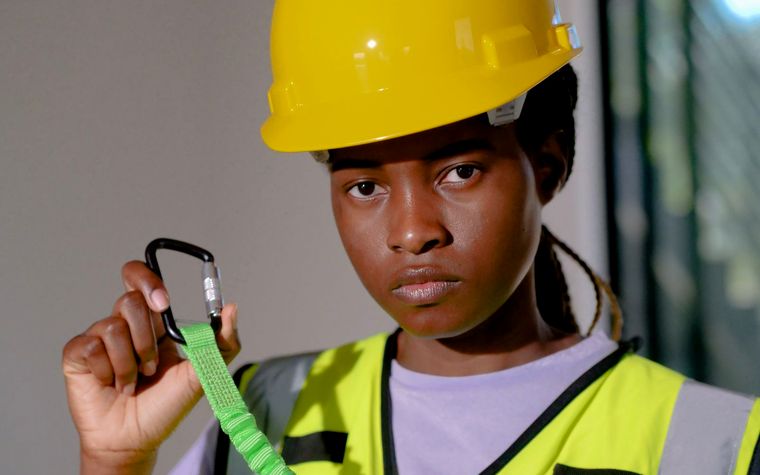
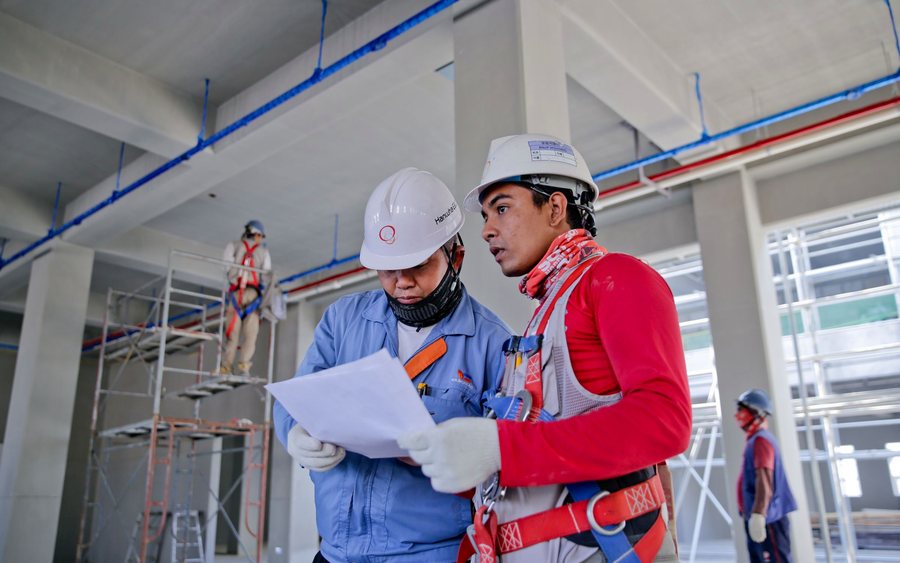
Distributors come to us at two points: when they want to add a private-label range, and when the supplier they already had has let them down. The second conversation is usually more instructive.
If your name is on the label, the buyer holds you responsible — for the certification, the consistency and the paperwork. Here is what to establish before you place the first order.
1. Do you manufacture, or do you buy and relabel?
The most important question, and the easiest to dodge. A trading house can show you the same photographs and the same certificates as a factory. The difference appears when something needs changing or something goes wrong.
Ask for a video walkthrough of the production floor, unedited, showing the operation you are buying: webbing cutting, stitching, hardware assembly, finishing, packing. Ask who owns the machines. Ask what happens in-house and what is subcontracted.
2. Which certification, and can I see the type-examination file?
A CE mark is a claim. The type-examination documentation from a notified body is the evidence behind it. Fall protection is PPE Category III, which means ongoing notified body involvement — not a self-declaration.
Ask for the certificate and the file it refers to, and check that the product described matches the product you are buying. Confirm the standard’s edition, not just the number.
3. What is tested, and how often?
There is a large gap between “the design passed type testing once” and “every batch is verified”. Ask what is tested on incoming materials, what is tested in process, and what is tested on finished goods. Ask whether test records are retained per batch, and whether you can have them with your shipment.
4. How is my batch traceable?
If a problem emerges in the field, you need to know which units are affected without recalling everything you ever sold. Ask how serial or batch numbers are assigned, what they encode, and whether the manufacturer can tell you — two years later — which webbing lot and which production run a given serial came from.
5. What can actually be customised, and what cannot?
Branding, webbing colour, packaging and labelling are usually straightforward. Changes to load-bearing geometry, hardware or stitch patterns are a different matter: they can invalidate the type examination and require re-certification. A good manufacturer will tell you which of your requests fall on which side of that line, and will not agree to everything.
6. What are the MOQs — per SKU or per order?
This is where private-label programmes quietly become expensive. A low headline MOQ across an order can still mean high minimums per colour, per size and per configuration. Get it in writing at SKU level, and model what it means for slow-moving variants sitting in your warehouse.
7. What is the real lead time, including certification and artwork?
Production time is only part of it. Add artwork approval, label proofs, sampling, pre-production approval and shipping. Ask for the timeline for a first order separately from repeat orders — the first is always longer, and unrealistic expectations here damage your own customer relationships.
8. Who owns the tooling, artwork and design?
If you paid for tooling or contributed design work, establish who owns it and whether you can take it elsewhere. Establish too whether your private-label design can be sold to anyone else — including your competitor down the road.
9. What happens when something is wrong?
Ask directly: what is the process for a defect claim, who pays for the return, what are the timelines, and can you speak to someone who will make a decision rather than relay one. Then ask for a reference from a distributor who has actually had a problem. How a supplier behaves on a bad day tells you more than a factory tour does.
Two things worth doing before the first full order
Order a sample and destroy it. Cut it open. Look at the stitching from the inside, the hardware finish, the webbing edges. It costs very little and tells you a lot.
Start smaller than you want to. A first order sized to be survivable if it goes wrong buys you real information about lead times, consistency and communication before you have serious money committed.
SB International has manufactured fall protection and PPE in Kanpur, India since 2003, with design, production, finishing and packing under one roof. If you are evaluating private-label manufacturing, talk to our team — we are happy to answer all nine of the questions above about our own operation.